
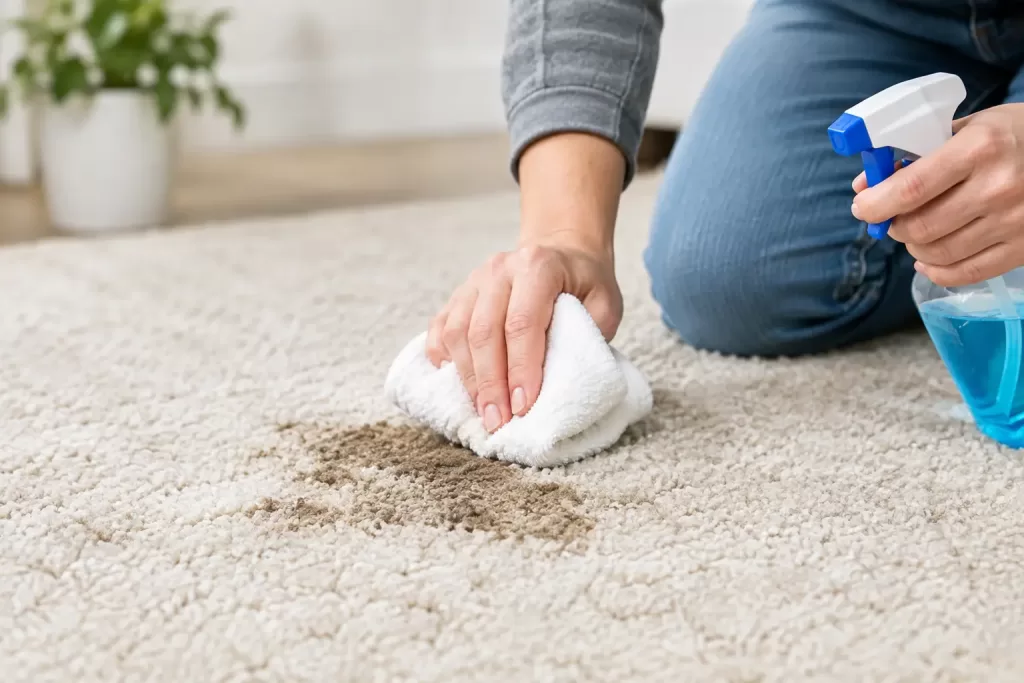
A stain does not become permanent just because you noticed it late. Old carpet stain removal is often possible, but the best approach depends on what caused the spot, what type of carpet you have, and what has already been tried. That faint tan ring by the sofa, the pet accident that came back after winter, or the dark path through the hallway may all need different treatment.
The biggest mistake is attacking an old stain with every cleaner under the sink. Too much product, hot water, and hard scrubbing can set a stain deeper, spread it wider, or leave behind a sticky residue that attracts more soil. A careful process gives your carpet its best chance of looking clean again.
Why Old Stains Are Harder to Remove
When a spill is fresh, much of it is still sitting near the carpet surface. After days, weeks, or months, the liquid can dry into the fibers and backing. Some stains also change as they age. Sugary drinks leave residue that grabs dirt. Pet urine can leave odor-causing deposits below the visible spot. Rust, ink, dye, and some food colors may chemically bond to the fibers.
That does not mean the stain is hopeless. It means quick spot treatment is not always enough. The visible mark may be only part of the problem, especially if an odor remains or the stain returns after the carpet gets damp.
Carpet material matters, too. Synthetic carpet is usually more forgiving than wool or other natural fibers. Light-colored carpet can show even a small amount of remaining discoloration, while patterned carpet may hide it well. If you are unsure what your carpet is made of, start gently and test every product in a hidden area.
Start With a Careful Look at the Stain
Before reaching for a cleaner, identify what you can. Think about the stain’s color, texture, location, and smell. A sticky brown spot near a chair may be an old drink spill. A yellow or dull gray area near a doorway may be tracked-in soil. A lingering odor near a wall or furniture leg often points to a pet accident.
If you do not know the source, avoid guessing with a strong chemical. Bleach-based products, harsh degreasers, and cleaners not made for carpet can remove color from the fibers or damage the backing. Mixing products can also create fumes or leave residues that make professional treatment more difficult.
Vacuum the area first. Dry soil, pet hair, and loose debris can prevent a spotter from reaching the stain itself. Use a slow pass and vacuum slightly beyond the marked area, particularly around traffic lanes.
A Safer At-Home Method for Old Carpet Stain Removal
For many common food, drink, and light soil stains, begin with a small amount of carpet-safe spot cleaner. Follow the label directions rather than soaking the carpet. More solution is not better. Oversaturating a small spot can push moisture and residue into the carpet pad, where it takes longer to dry and can create a larger problem.
Apply the solution to a clean white towel or cloth first, then blot the stain from the outside toward the center. This helps prevent the spot from spreading. Press firmly, lift, and move to a clean section of the towel as color transfers. Do not scrub in circles. Scrubbing can roughen carpet fibers and create a fuzzy patch that catches light differently from the surrounding carpet.
After treatment, lightly rinse the area with a separate cloth dampened with clean water. Blot again to remove as much cleaning residue as possible. Place a dry white towel over the spot, weigh it down gently for several minutes, then allow the carpet to dry completely. A fan can help speed drying.
Once dry, inspect the carpet in normal room lighting. A stain that looks gone while damp may reappear as it dries. If the area feels stiff or attracts dirt soon afterward, residue may still be present.
Match the Treatment to the Cause
Not every old stain responds to the same product. Enzyme-based treatments can help break down organic material such as pet accidents, food, and some bodily fluids. They need adequate contact time to work, so follow the label carefully. For pet stains, the treatment must reach as deeply as the original accident did or the odor may remain underneath.
Greasy stains from food, cosmetics, or shoes often need a carpet-safe solvent or degreasing treatment. These are best used sparingly and only after a colorfastness test. Coffee, tea, and wine may leave a tannin stain that requires a targeted carpet product. Ink, paint, rust, and bleach spots are different categories entirely. In some cases, the issue is not removable soil but lost carpet color.
If a stain lightens but does not disappear, stop before repeatedly treating it. Multiple rounds of the wrong product can cause more damage than the remaining mark.
When DIY Methods Usually Fall Short
A professional cleaning is often the better choice when a stain covers a large area, has an odor, keeps coming back, or has been treated several times already. This is especially true for pet urine. What looks like one small spot can extend into the backing and pad, and surface cleaning alone may not resolve the odor.
Heavy traffic lanes also deserve more than spot treatment. Those gray or brown pathways are usually a combination of embedded dry soil, oils carried in from outside, and cleaner residue from past attempts. They need an even, thorough cleaning across the area so the treated section does not stand out from the rest of the room.
Professional equipment can remove soil and cleaning solution more completely than most rental machines. The goal is not just to make the stain less visible. It is to lift contaminants without leaving the carpet overly wet or residue-prone. Low-moisture cleaning can be particularly helpful for busy households that need the room back sooner rather than waiting all day for carpet to dry.
There are limits, and a trustworthy cleaner should be direct about them. Bleach damage, sun fading, permanent dye loss, old paint, rust, and some set-in stains may improve without disappearing completely. Still, a noticeable improvement can make a room feel refreshed and extend the life of the carpet.
Avoid These Common Carpet Stain Mistakes
A few habits make old spots much harder to correct:
- Scrubbing aggressively instead of blotting
- Pouring large amounts of cleaner directly onto the carpet
- Using dish soap or laundry detergent without fully rinsing it out
- Applying heat to protein-based stains, which can set them
- Mixing cleaning chemicals or using products not labeled for carpet
- Ignoring a recurring pet odor because the surface looks clean
The trade-off with home treatment is simple: it can be convenient and affordable for a small, known stain, but it carries more risk when the cause is unknown or the carpet is delicate. When in doubt, preserve the fibers rather than chasing a perfect result with stronger chemicals.
Keep Old Stains From Showing Again
After a successful cleaning, make the area easier to maintain. Vacuum high-traffic rooms regularly, especially entryways, hallways, and the path between the kitchen and living room. Use mats at exterior doors and address fresh spills promptly with blotting before they have time to settle.
For homes with pets, identify accidents early and treat both the stain and the odor source. If a pet repeatedly returns to one area, there may still be odor below the carpet surface. For families with children, keeping a plain white towel and a carpet-safe spotter on hand makes fast response much easier.
A periodic whole-room cleaning also helps. It removes the fine soil and residue that make individual spots more noticeable, restores the look of traffic areas, and gives you a clearer view of stains that need special attention.
If an old stain has become the first thing you notice when you walk into the room, it is worth getting a professional opinion before replacing carpet. Dry Time provides careful, low-moisture carpet cleaning for Cedar Valley homes, with clear expectations about what can improve and what may be permanent. A free estimate can help you decide whether that stubborn spot needs more time, a targeted treatment, or a deeper clean that gives the entire room a fresh start.