
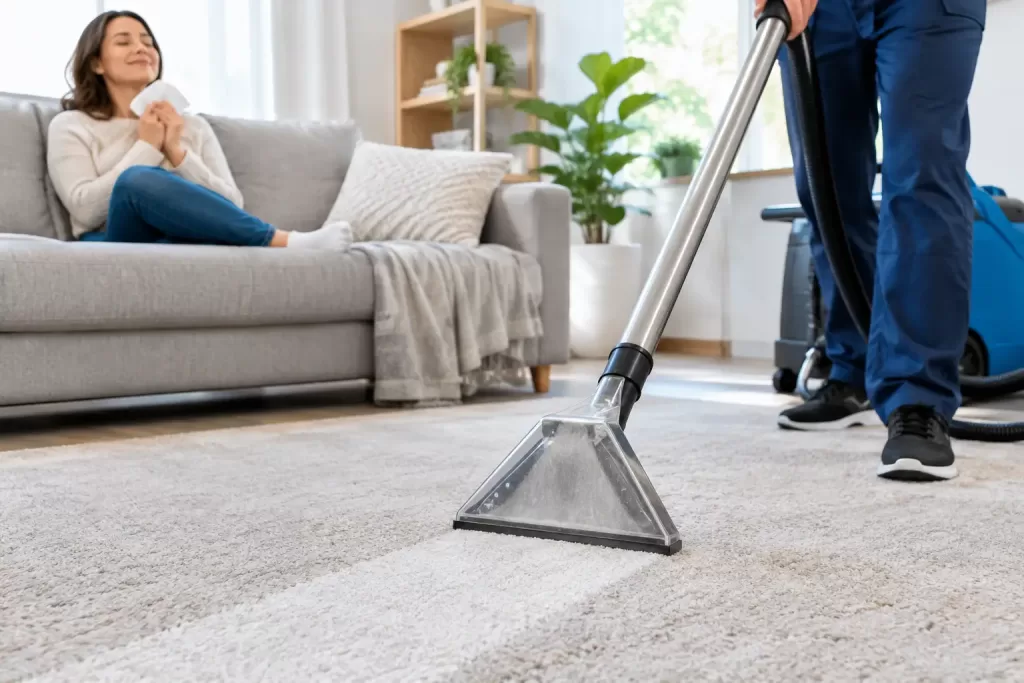
A carpet can look perfectly clean and still hold the particles that leave you sneezing on the couch, waking up congested, or reaching for tissues after playing on the floor. Carpet cleaning for allergies is not about making a room smell stronger or look freshly vacuumed. It is about reducing the dust, pet dander, pollen, and other buildup that settles deep below the surface.
For Cedar Valley households, that buildup is easy to understand. Kids track in dirt after school and sports. Pets shed. Iowa pollen comes in on shoes, clothing, and open windows. During heating season, homes stay closed up longer. Those particles do not disappear when they land on carpet fibers. They work their way down, then get stirred back into the room every time someone walks across the floor.
Why Carpets Can Make Allergy Symptoms Feel Worse
Carpet is not automatically the problem in an allergy-sensitive home. In fact, carpet can hold onto airborne particles rather than allowing them to circulate right away. The issue comes when that material accumulates and is not removed thoroughly.
A regular vacuum is an important part of home care, but it has limits. It usually picks up loose debris near the surface. Fine dust, pet dander, pollen, hair, food crumbs, and residue from everyday life can settle farther into the pile and around the backing. Foot traffic then lifts a portion of that material back into the air.
This is why symptoms may feel more noticeable in the rooms your family uses most. Bedrooms, living rooms, hallways, and play areas collect a steady mix of particles. Add a dog who likes the sofa, a cat who naps in a sunny corner, or a busy entryway, and the carpet has a lot to manage.
Allergy symptoms have more than one cause, so professional cleaning is not a cure for seasonal allergies, asthma, or other medical conditions. It can, however, be one practical part of reducing the allergen load inside your home. The goal is a cleaner surface and less built-up material underfoot.
What Professional Carpet Cleaning Does Differently
Effective carpet cleaning for allergies needs to do more than dampen the fibers and leave a pleasant scent behind. It should loosen embedded soil and contaminants, then use professional extraction to remove that material from the carpet.
At Dry Time, we use low-moisture carpet cleaning methods, pro-grade extraction equipment, and family- and pet-safe cleaning solutions to provide a deep clean without leaving your home out of commission all day. The benefit is simple: carpets receive the attention they need, then dry in hours instead of staying wet for a day or longer.
Fast drying matters for more than convenience. Carpets that stay damp too long can create their own problems, especially in humid weather or rooms with poor airflow. A low-moisture process helps minimize that concern while letting you get back to normal life sooner.
Professional cleaning can also address the buildup a vacuum cannot fully reach. That includes fine grit that wears down carpet fibers, pet hair tucked into the pile, odor-causing residue, and the dust that makes a home feel less fresh even when it looks tidy. Results depend on carpet condition, fiber type, traffic level, and how long a stain or odor has been present, but a detailed cleaning gives your home a meaningful reset.
Odors Are Often a Clue
A lingering pet or musty odor does not always mean there is a major problem, but it can signal residue beneath the visible surface. Pets bring in outdoor allergens while also leaving dander and oils in the carpet. Spills, wet shoes, and past accidents can add to the mix.
Treating the odor source matters. Covering it with fragrance does not remove the underlying material. A proper cleaning focuses on lifting what is in the fibers so the room feels genuinely cleaner, not temporarily masked.
How Often Should Allergy-Sensitive Homes Clean Carpets?
There is no single schedule that fits every household. A couple without pets in a low-traffic home may do well with professional carpet cleaning every 12 to 18 months. A family with children, pets, frequent visitors, or known allergy concerns may benefit from cleaning every 6 to 12 months.
Consider a more frequent schedule if you notice that the carpet looks dull soon after vacuuming, pet odors return quickly, family members spend a lot of time on the floor, or allergy symptoms seem worse indoors. Bedrooms deserve special attention because people spend so many hours there, often with doors closed and less air movement.
Seasonal timing can help, too. A professional cleaning after spring pollen peaks can remove what has been tracked inside. Cleaning before the colder months can be useful as windows close and your household begins spending more time indoors. If you are preparing for a new baby, hosting family, moving into a home, or recovering from a busy season with pets and kids, cleaning can make the space feel more comfortable right away.
Habits That Help Between Professional Cleanings
Professional service works best alongside simple home routines. You do not need to turn cleaning into a full-time job. Consistency matters more than perfection.
Vacuum high-traffic rooms and pet areas at least once or twice a week, using a vacuum with good filtration if possible. Move slowly enough for the vacuum to pick up fine particles instead of making one quick pass. Entry mats at exterior doors also reduce what gets tracked into the carpet.
Address spills promptly with a clean white towel and gentle blotting. Avoid scrubbing, which can spread the spill and push it deeper into the fibers. It is also wise to follow your carpet manufacturer’s care recommendations before using store-bought spot products. Some products leave sticky residue that attracts more dirt, while others can affect color or texture.
Wash pet bedding, blankets, and throw rugs regularly. Wipe paws after muddy or high-pollen walks. Change HVAC filters on schedule and keep up with dusting, particularly around baseboards, vents, blinds, and upholstered furniture. These steps help reduce the particles that would otherwise make their way back into the carpet.
Do Not Forget Upholstery
If someone in your home has allergies, the couch and favorite chair deserve the same thought as the carpet. Upholstery collects pet dander, hair, body oils, dust, and crumbs, especially in the places everyone uses daily. Cleaning only the floors can leave a major source of buildup behind.
A coordinated carpet and upholstery cleaning is often a practical choice for homes with pets or active families. It brings the room back to a more consistently clean condition instead of refreshing one surface while leaving another untouched.
What to Expect From an Allergy-Focused Appointment
Before the appointment, pick up small items, toys, and loose belongings from the carpeted areas whenever possible. This gives the cleaner access to more of the floor and helps the service stay efficient. Vacuuming beforehand can be helpful, though it is not a replacement for professional cleaning.
During the visit, point out areas with pet accidents, recurring odors, heavy traffic, or stains. Honest details help determine the right approach. Not every stain can be completely removed, particularly if it has set for a long time or altered the carpet dye, but identifying it early gives it the best chance for treatment.
After cleaning, allow the carpet to dry as directed and keep pets and family members off it until it is ready for normal use. Good airflow can help. Once dry, the room should feel fresher, look more even, and be easier to maintain with regular vacuuming.
A cleaner carpet will not replace allergy medication, medical advice, or other steps recommended by your healthcare provider. But it can remove one common collection point for the particles your family brings home every day. When your floors, furniture, and entry areas are cared for together, the difference is something you can feel when you walk through the door.
If your carpets have become the catch-all for pet hair, pollen, and everyday Cedar Valley life, a detailed professional cleaning can be a straightforward next step toward a fresher home. Request a free estimate, ask questions about your specific rooms, and choose a service that treats every home like its own.