
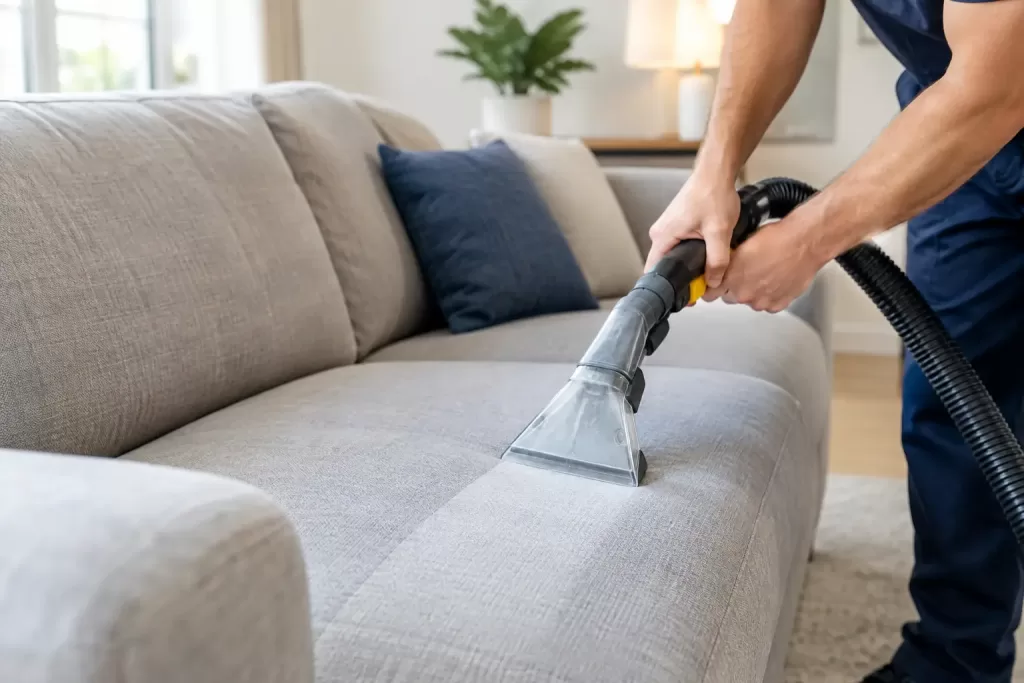
That favorite spot on the couch sees more life than almost any other place in your home. It catches snack crumbs, pet hair, muddy paws, spilled drinks, and the everyday oils that build up quietly in the fabric. A professional sofa upholstery cleaning service gives it the deep reset that vacuuming and spot sprays cannot.
For Cedar Valley families, clean furniture is about more than appearance. It means a fresher room, fewer lingering odors, and a comfortable place to gather without wondering what is hiding in the cushions. The right cleaning process treats the fabric with care while lifting the soil that makes upholstery look dull and feel less inviting.
What Builds Up in Your Sofa Over Time
A sofa can look reasonably clean from across the room while holding a surprising amount of dry soil beneath the surface. Dust, skin oils, pollen, food particles, and pet dander settle into the fibers and cushion seams. If there are pets or young children in the home, that buildup usually happens faster.
Odors work the same way. A fabric deodorizer may freshen the surface for a short time, but it cannot fully solve an odor source trapped in the upholstery. Pet accidents, spilled milk, smoke, and general body oils need to be addressed at the fiber level for a result that lasts.
Regular vacuuming helps, especially along creases and under removable cushions. Still, vacuuming is maintenance, not a full cleaning. It cannot rinse away embedded grime or break down many common stains. That is where professional equipment and the correct cleaning solution make a visible difference.
When to Schedule a Sofa Upholstery Cleaning Service
There is no single schedule that works for every home. A lightly used sofa in a pet-free home may need professional care every 18 to 24 months. A busy family room sofa with kids, dogs, or frequent guests may benefit from cleaning once a year, or sooner after a major spill or odor issue.
Look beyond obvious stains. Your furniture may be ready for cleaning if the fabric appears darker where people sit, the cushions feel rough or matted, or the room has a stale smell that returns after regular cleaning. Allergies can also be a reason to schedule service, especially when seasonal pollen and household dust seem to settle into every soft surface.
A prompt appointment is often the best option after a spill. The longer a stain sits, the more time it has to bond with the fibers. Some stains can be greatly improved even after they have dried, but quick action gives cleaning the best chance of success.
How Professional Sofa Cleaning Works
Good upholstery cleaning starts with identifying the fabric, its condition, and the type of soil or stain involved. Cotton, microfiber, synthetic blends, and delicate natural fibers do not all respond the same way. Using too much water or the wrong product can create water rings, color loss, or fabric damage, which is why a one-size-fits-all approach is risky.
After inspection, a technician treats problem areas and loosens embedded soil with upholstery-safe cleaning solutions. Pro-grade extraction equipment then removes the suspended dirt, residues, and moisture from the fabric. The goal is not simply to make the sofa smell clean. It is to leave the fibers cleaner without soaking the cushions.
At Dry Time, the focus is detailed cleaning that respects your home and belongings. Family- and pet-safe solutions, careful stain treatment, and professional extraction help deliver the kind of before-and-after difference homeowners want to see. Every result is earned through attention to the fabric, the soil, and the details people notice when they sit down.
Faster Drying Makes a Real Difference
Nobody wants to give up the living room for days after furniture cleaning. Drying time depends on the material, cushion thickness, indoor humidity, and how heavily soiled the upholstery is. A heavily saturated sofa can stay damp long enough to become inconvenient, and excess moisture is never a good fit for upholstered furniture.
A controlled, low-moisture approach helps reduce that disruption. In many cases, upholstery is ready to use within hours rather than the next day. Keeping ceiling fans running, opening airflow when weather allows, and avoiding sitting on the furniture until it is fully dry can speed the process along.
Fast drying should not mean rushing through the cleaning. The best service balances thorough soil removal with the proper amount of moisture for the fabric. That is how you get cleaner furniture without trading a stain problem for a long drying problem.
What About Pet Stains, Odors, and Old Spots?
Pet-related stains are one of the most common reasons homeowners call for upholstery cleaning. The visible spot is only part of the issue. When urine reaches deep into the cushion or backing, odor can return when humidity rises or when the area gets damp again. Treatment needs to target the source, not cover it up with fragrance.
Old stains can often improve significantly, but honest expectations matter. Some substances, including certain dyes, bleach marks, ink, or long-set food stains, may permanently alter the fabric color. Cleaning can remove the soil around the stain and make it less noticeable, yet it cannot always reverse fiber damage or discoloration.
Before your appointment, avoid experimenting with multiple store-bought products. Mixing cleaners can set a stain, leave a sticky residue, or interfere with professional treatment. Blot fresh spills with a clean white towel, work from the outer edge toward the center, and avoid aggressive rubbing.
Preparing Your Furniture for Cleaning
Preparation is simple and helps the appointment move efficiently. Remove throws, pillows, toys, and personal items from the sofa. If possible, clear a path from the entryway to the room so equipment can be brought in safely. Let the technician know about specific stains, odor concerns, fabric sensitivities, or previous products used on the upholstery.
You do not need to move a large sectional or turn your living room upside down. A professional cleaner can explain what needs to be accessible and work carefully around your space. The goal is convenient service with as little disruption to your day as possible.
If cushions are removable, leave them in place unless you have been instructed otherwise. Their condition and construction can affect how they are cleaned and dried. This is also a good time to point out the seat everyone uses, the pet’s favorite corner, or the stain you are most concerned about.
Clean Furniture Supports a Cleaner Home
Your sofa is a major soft surface in the room, right alongside carpets, area rugs, and fabric chairs. Cleaning only one surface can help, but pairing upholstery care with carpet cleaning often makes the whole space feel noticeably fresher. It is especially helpful after winter, allergy season, a busy holiday stretch, or a move into a new home.
For households with pets, ongoing maintenance matters more than waiting for furniture to look visibly dirty. Vacuuming weekly, rotating cushions when possible, and addressing accidents quickly will help protect the fabric between professional visits. These small habits can extend the life of a sofa and keep the room more comfortable for everyone.
A cleaner couch changes the way a room feels. It becomes a place for movie nights, visiting family, and quiet evenings without the stale odors or worn look that slowly become part of the background. When your furniture needs that reset, choose careful cleaning, realistic guidance, and results you can enjoy the same day.