
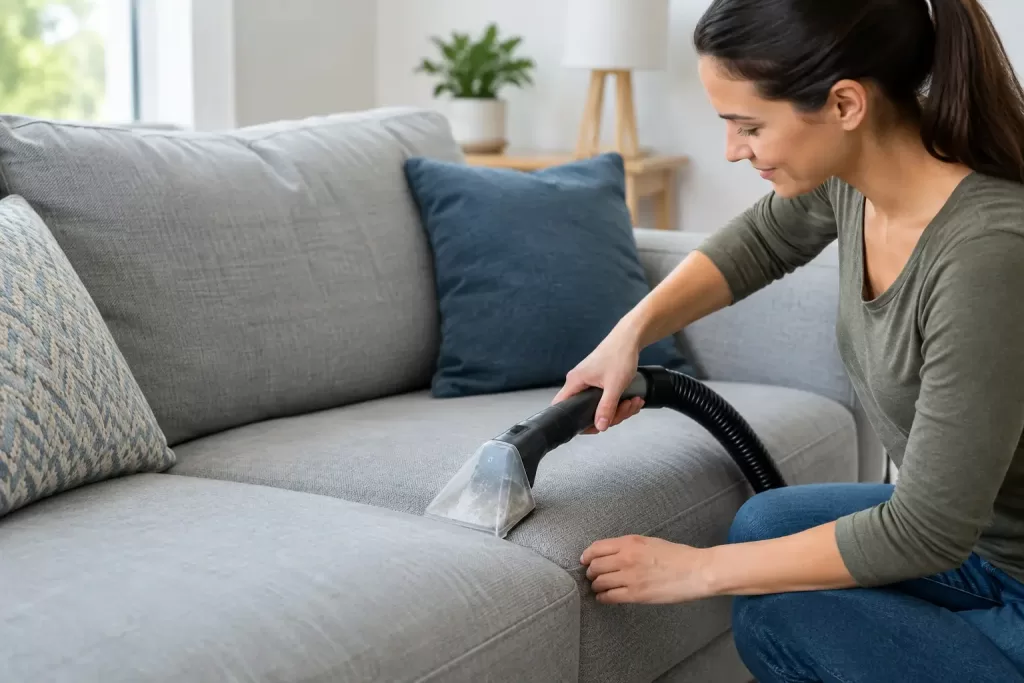
A couch can look clean and still make the whole room feel off. Fabric couch odor removal works best when you treat the cause, not just the smell sitting on the surface. Pet accidents, spilled milk, body oils, smoke, damp cushions, and everyday use can all settle below the fabric where room sprays cannot reach.
The good news is that most upholstery odors can be improved. The right approach depends on what caused the odor, how long it has been there, and whether the contamination reached the cushion filling or frame. Acting early helps, but an older smell is not automatically a lost cause.
Start fabric couch odor removal with the source
Before applying any product, take a few minutes to inspect the couch. Remove throw blankets and pillows, then check under the cushions, along seams, and between the arms and seat. A forgotten snack, pet hair, a wet spill, or a small accident can create a stronger odor than the visible upholstery suggests.
Use your nose close to the fabric rather than judging the whole room. If one cushion smells stronger than the rest, you have a useful starting point. For pet odors, a black light may help reveal older urine spots that are no longer visible in normal light.
Also check the cleaning code on the manufacturer tag, often found beneath a cushion or under the sofa. “W” usually means water-based cleaning is allowed, “S” calls for solvent-based products, “WS” can handle either, and “X” generally means vacuuming only. That tag matters. Using the wrong cleaner can leave water rings, shrink fabric, fade color, or push moisture deeper into the cushion.
Remove the dry material before treating odor
Odor treatment works better when loose debris is gone first. Vacuum the full couch slowly using an upholstery attachment, paying attention to seams, crevices, and the area under removable cushions. Pet hair, crumbs, skin flakes, and dust can all hold odor and make a freshly cleaned couch smell stale again sooner.
If cushions have removable covers, follow their care instructions exactly. A cover that can be washed may come out smelling fresh, but the cushion insert underneath may still be carrying the problem. Avoid putting upholstery covers in a dryer unless the label specifically allows it. Heat can shrink the cover and make it difficult to put back on.
For a small, recent spill, blot with a clean white towel. Do not scrub. Scrubbing spreads the mess, roughs up fabric fibers, and can drive liquid further into the padding. Work from the outside of the affected area toward the center.
Choose the right treatment for the odor
Not every odor responds to the same solution. A light, general “lived-in” smell may improve with careful cleaning and full drying. Pet urine, sour spills, smoke, and mildew need a more targeted response.
For everyday body oil and food odors
A fabric-safe upholstery cleaner can help remove the oils and residue that trap everyday smells. Always test any cleaner in a hidden spot first, such as the back edge of a cushion. Apply sparingly rather than soaking the fabric, gently work the product according to its directions, and blot away loosened soil with clean towels.
Baking soda can help with mild surface odors when used carefully. Sprinkle a light, even layer over dry upholstery, let it sit for several hours, then vacuum thoroughly. It is not a replacement for cleaning a spill or pet accident, but it can freshen a couch between deeper cleanings. Be cautious with thick or loose-weave fabrics, where powder can be harder to remove completely.
For pet urine odors
Pet urine is different because the odor often comes from residues left below the fabric. If the spot is fresh, blot up as much moisture as possible before using a cleaner made for urine odor. An enzyme-based product can be useful when it is compatible with the upholstery cleaning code and used according to its label.
The challenge is depth. If urine reached the cushion foam, backing, or wooden frame, treating only the top fabric may make the smell disappear briefly and return when humidity rises. Avoid heavy saturation with a household spray or rental machine. Too much moisture can create a second problem: slow drying and a musty odor inside the cushion.
For smoke, mildew, or musty odors
Smoke odor can cling to fabric, cushion filling, and the wood inside the couch. It often needs more than deodorizer because the odor-causing residue must be removed. Mildew or mustiness deserves extra attention, especially if the couch was stored in a basement, garage, or damp area.
If you see visible mold, find the moisture source before cleaning the couch. A damp room, water leak, or wet cushion that never dried fully can keep the odor coming back. Never cover a mildew smell with fragrance and assume the issue is solved.
Why drying matters as much as cleaning
A couch that stays wet too long can develop a new odor even after a successful cleaning. That is why low-moisture methods, proper extraction, air movement, and realistic drying expectations matter. Open windows when weather allows, run ceiling fans, and keep cushions separated enough for air to circulate.
Do not sit on the couch until it is dry to the touch. Children, pets, and body weight can press remaining moisture deeper into the cushions. Depending on fabric, soil level, humidity, and the cleaning method used, upholstery may dry in a few hours or take longer. A professional should be clear about what to expect before the work begins.
When home methods are not enough
It is time to call a professional when the odor returns after cleaning, the couch smells stronger in warm or humid weather, or the source involves pet accidents, smoke, vomit, spoiled food, or a large liquid spill. These situations often require deeper flushing, extraction, and odor treatment than a surface product can provide.
Professional upholstery cleaning is also a smart choice for delicate fabric, large sectional sofas, and furniture with fixed cushions. The goal is not simply to make the room smell better for a day. It is to remove embedded soil and odor-causing residue while using the right amount of moisture for the fabric and filling.
At Dry Time, we treat every home like our own, using professional equipment and family- and pet-safe cleaning solutions to give upholstery the detailed attention it needs. Before treatment, a careful inspection helps identify what is realistic. Some odors can be removed completely, while old contamination that reached deep into foam or wood may require additional treatment or, in rare cases, cushion replacement.
Keep your couch fresher between cleanings
A few small habits make a noticeable difference. Vacuum upholstered furniture regularly, especially in homes with shedding pets. Clean spills promptly, rotate loose cushions when possible, and wash throws and pillow covers often enough that they are not transferring odor back to the couch.
If pets use the furniture, consider a washable cover for their favorite spot. It will not eliminate the need for occasional upholstery cleaning, but it can protect the fabric from oils, dander, and small accidents. Keep wet coats, swimsuits, and damp towels off the couch as well. Moisture is one of the fastest ways to turn a minor odor into a deeper upholstery problem.
A fresh couch should smell neutral, not heavily perfumed. When the fabric is truly clean and fully dry, the room feels more comfortable without needing to hide anything. If an odor keeps coming back, that is your cue to look below the surface and give the furniture the deeper care it is asking for.