
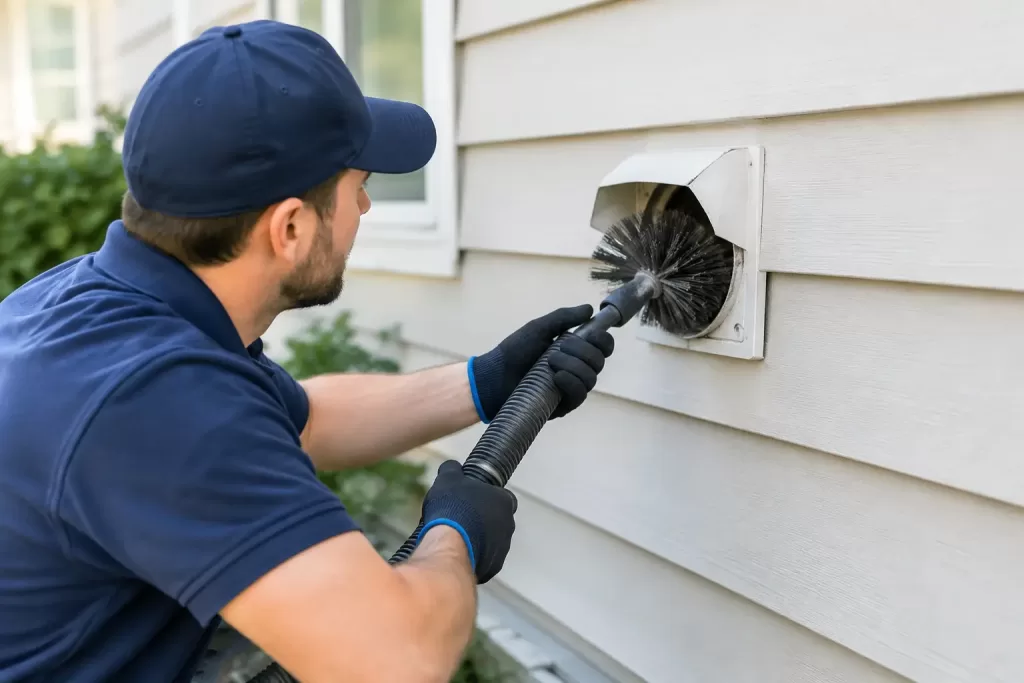
A dryer that needs two or three cycles to finish a normal load is not just wasting an afternoon. It may be pushing hot, lint-filled air through a restricted vent line. Dryer vent cleaning cost is a common question for Cedar Valley homeowners, and the honest answer is that pricing depends on the vent system, access, and buildup inside it. The right service should leave you with a clearer vent path, better dryer performance, and a safer home – not a surprise bill.
What Does Dryer Vent Cleaning Cost?
Most professional dryer vent cleanings are priced based on the time, equipment, and access required to clean the complete path from the dryer connection to the exterior vent hood. A short, straight run with easy access generally costs less than a long vent that travels through a basement ceiling, wall cavity, attic, or roof.
For many homes, the service is straightforward: a technician disconnects the dryer, removes lint and debris from the ductwork with professional equipment, checks the exterior termination, and verifies that air is moving properly. When the route is longer or the vent has multiple turns, cleaning takes more work. That is why a free estimate is useful. It gives you a price based on your home rather than a one-size-fits-all number.
A very low advertised price can be tempting, but ask what it includes. Some offers cover only a basic cleaning and add charges for common conditions such as a longer vent, a roof exit, or cleaning behind the dryer. Clear pricing should explain the work before it begins.
What Changes the Price of Dryer Vent Service?
The layout of your vent is usually the biggest factor. Dryer vents work best when they have a short, direct path outdoors, but many homes have lines that run a considerable distance before reaching an exterior wall or roof. Each additional section and bend creates another place for lint to collect and another area that needs attention.
Vent length and number of turns
A laundry room on an exterior wall may have a short, simple duct run. A laundry room in the center of the home may have a much longer route, sometimes with several elbows. Lint tends to settle at those turns, especially when the dryer has struggled with airflow for a while. Longer, more complex vents can require additional cleaning time and specialized tools.
Accessibility
Access matters for both the dryer connection and the vent exit. A dryer tucked tightly into a small laundry closet can take longer to safely pull out and reconnect. Exterior vents located high on a wall or exiting through a roof can also require added setup and safety precautions.
A professional should protect the surrounding area, handle the dryer carefully, and make sure it is positioned correctly after the work is finished. That attention is part of a job done right, not an unnecessary extra.
Heavy lint, nesting material, and damaged components
Lint is expected. Compacted lint, bird or rodent nesting material, disconnected ducts, crushed flexible venting, and a blocked exterior hood are different situations. These conditions may increase the price because they require more than routine removal.
Sometimes cleaning reveals that the vent itself is damaged or improperly routed. Cleaning can restore airflow when buildup is the problem, but it cannot make unsafe or deteriorated vent material reliable. In that case, repair or replacement may be the wiser investment. A trustworthy technician will explain the issue clearly and let you decide how to proceed.
Roof exits and exterior vent caps
An exterior vent hood needs to open freely when the dryer runs and close afterward to help keep pests and weather out. Screens on dryer vent exits can also trap lint quickly and restrict airflow. If the hood is damaged, clogged, or difficult to reach, that can affect the scope of the job.
Roof-vented systems deserve special care. They can be cleaned effectively, but access is more involved than a ground-level wall vent. The added cost reflects the labor and safety measures required, not just the time spent removing lint.
Why Professional Cleaning Is Worth Considering
A dryer vent is easy to overlook because most of it is hidden. The lint screen catches a lot, but not everything. Fine lint can pass through the screen and gather inside the duct, particularly where airflow slows down. Fabric softener residue, pet hair, and moisture can make that material cling to the vent walls.
The result is often gradual. Clothes take longer to dry. The laundry room feels warmer. The dryer may have a hot or musty smell after a cycle. You may notice lint collecting around the exterior hood, or the flap may barely open while the dryer is running. These are practical signs that it is time to schedule service.
The main value is safety. Restricted dryer vents can cause excess heat to build up, and lint is combustible. Cleaning also helps your dryer move moist air outside as intended, which can reduce unnecessary strain on the appliance. No service can guarantee that a dryer will never have a problem, but removing a major source of restriction is a sensible part of home maintenance.
For busy families, efficiency matters too. A dryer that finishes loads properly can mean fewer repeat cycles, less time in the laundry room, and less energy wasted on clothes that should already be dry.
When Should You Schedule a Cleaning?
For many households, annual dryer vent cleaning is a practical starting point. Homes with larger families, frequent laundry, shedding pets, or long vent runs may benefit from more frequent service. A household that washes several loads every day will put far more lint through the system than a one- or two-person home.
Do not wait for a calendar reminder if your dryer is showing warning signs. Schedule a check sooner when loads take longer than usual, the dryer becomes unusually hot, the exterior vent flap does not open, or you notice a burning smell. Turn the dryer off and address a burning odor right away rather than running another cycle to see whether it goes away.
It also makes sense to have the vent cleaned after moving into a home if the maintenance history is unknown. New homeowners often clean carpets, upholstery, and surfaces before settling in, yet the dryer vent is one of the most overlooked parts of the house.
How to Get an Accurate Dryer Vent Cleaning Estimate
A few details can help a local cleaning company provide a more useful estimate. Be ready to share where the dryer is located, whether it is on the main floor, in a basement, or upstairs, and where you believe the vent exits. If you know the vent goes through the roof or runs a long distance across the home, mention that too.
It helps to describe what you are noticing: longer dry times, little airflow outside, visible lint, or a dryer that feels too hot. These details do not replace an inspection, but they help set expectations for the appointment.
Before the technician arrives, clear laundry baskets and stored items away from the dryer if possible. You do not need to take the appliance apart yourself. In fact, forcing a dryer forward or disconnecting ductwork without the right setup can damage the connection or create a gas-line concern on gas dryers. Leave the hands-on work to the professional.
At Dry Time, every home is treated with the care it deserves. The goal is not to rush through a vent line. It is to remove the buildup that is slowing your dryer down, check the airflow path, and leave the laundry area clean and ready to use.
The Cheapest Option Is Not Always the Lowest Cost
Comparing quotes is smart, but compare the service itself as well as the number. Does the price include cleaning the full vent run? Will the exterior hood be checked? Are common access conditions explained upfront? Is the company local and accountable if you have a question after the appointment?
A proper cleaning can cost more than a quick lint-screen-only service, but it should address the part of the system that creates the real concern: the concealed ductwork between the dryer and the outdoors. Paying for thorough work now may help you avoid repeated dry cycles, frustrating laundry days, and preventable wear on your appliance.
If your dryer has started taking longer to dry, trust that change. A simple, professional vent cleaning can bring back the airflow your laundry room has been missing and give your household one less hidden maintenance problem to worry about.