
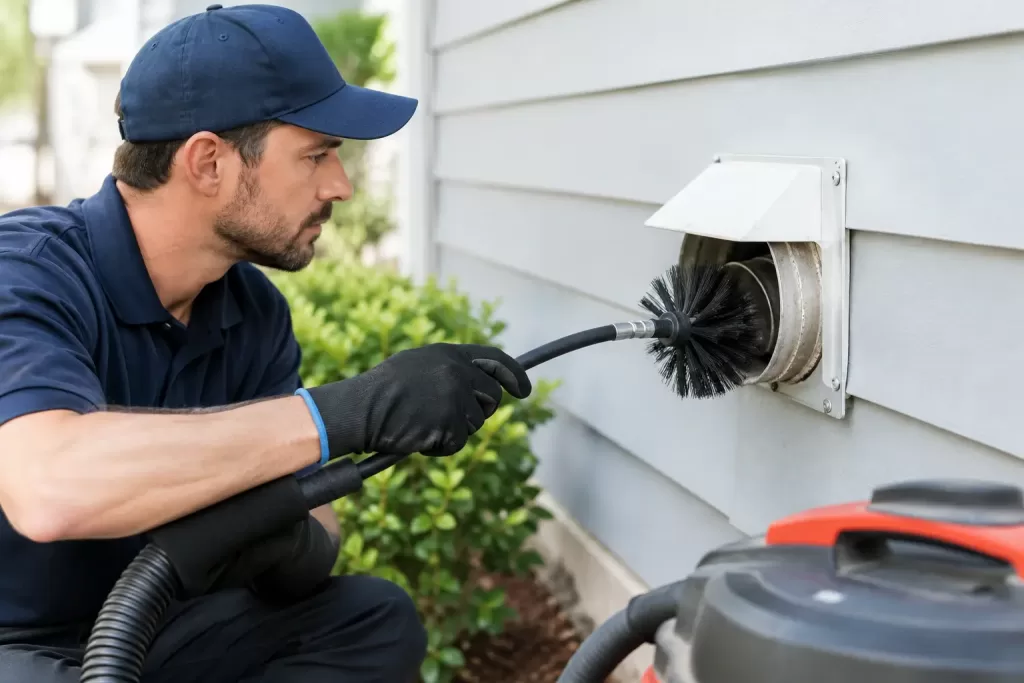
A dryer that takes two or three cycles to dry a normal load is not just frustrating. It may be warning you about a clogged exhaust path. Dryer vent cleaning fire prevention begins with recognizing that lint does not stay inside the lint screen. It travels through the vent line, settles in bends and joints, and can restrict the hot, moist air your dryer needs to push outdoors.
For Cedar Valley homeowners, this is one of those simple maintenance jobs that can make a meaningful difference. A clear dryer vent helps reduce a common household fire risk, lowers strain on the appliance, and gets laundry done in less time. It is a practical way to care for your home, your family, and the dryer you rely on every week.
Why lint buildup creates a fire risk
Every load of laundry sheds small fibers. The lint screen catches a lot of them, but not all of them. Fine lint can pass through the screen and collect inside the dryer cabinet, transition hose, and exterior vent duct. Over time, that buildup narrows the path where heat and air are supposed to escape.
When airflow is restricted, the dryer has to run hotter and longer. That extra heat can overwork internal components and, in the wrong conditions, ignite accumulated lint. Lint is dry, lightweight, and highly flammable. The danger is not usually caused by one load of towels. It is the gradual buildup that goes unnoticed for months or years.
A clean vent also allows moisture to leave the house properly. When a vent is blocked, humid air may stay in the laundry area or leak from connections behind the dryer. That can contribute to musty odors and excess moisture where it does not belong.
Signs your dryer vent needs attention
The clearest sign is longer drying time. If clothes that once dried in one cycle now need a second cycle, the issue may be the vent rather than the dryer itself. Heavy items such as towels and bedding naturally take longer, but a sudden or consistent change deserves a closer look.
Other warning signs include a dryer that feels unusually hot on the outside, a hot or burning smell during operation, or a laundry room that becomes warm and humid while the dryer runs. You may also notice little or no air coming from the outdoor vent hood. If the flap outside does not open while the dryer is operating, airflow may be restricted.
Pay attention to lint around the dryer, behind the appliance, or near the exterior vent opening. This does not always mean the entire vent is clogged, but it can point to a loose connection, damaged ductwork, or an exhaust path that needs cleaning.
If you smell burning, see smoke, or believe the dryer is overheating, stop using it and have the system checked before running another load. Cleaning is preventive maintenance, not a reason to ignore an active safety concern.
How often should a dryer vent be cleaned?
For many homes, professional dryer vent cleaning once a year is a sensible starting point. The right schedule depends on how your household uses the dryer and how the vent is installed.
A busy family doing laundry most days may need service more often than a one- or two-person household. Pet owners can also see faster lint buildup because pet hair and dander mix with fabric fibers. Long vent runs, multiple turns, and vents that exit through a roof instead of a nearby exterior wall can collect lint more quickly and are harder to inspect from the outside.
Newer dryers may alert you when airflow is poor, but those messages should not be the only maintenance plan. A dryer can still operate with reduced airflow long before it displays an error. Regular cleaning helps catch buildup before it becomes an expensive appliance problem or a safety issue.
The lint screen still matters every load
Cleaning the lint screen before or after each load is one of the easiest habits a homeowner can build. It improves airflow at the dryer and helps keep loose lint from moving deeper into the system.
Still, a clean lint screen does not mean the vent line is clean. Fine particles can pass through the screen, and residue from dryer sheets or fabric softeners can leave a film that reduces airflow through the mesh. Washing the screen gently with warm water and mild soap from time to time can help remove that residue. Let it dry fully before putting it back.
What professional dryer vent cleaning addresses
A professional service is designed to clean more than what you can reach from the laundry room. The work typically focuses on the exhaust route from the dryer connection through the ductwork and out to the exterior termination. Specialized equipment helps remove lint from long runs, turns, and areas that are difficult to reach safely.
The appointment is also an opportunity to look for common problems that reduce airflow. These can include crushed flexible hoses behind the dryer, disconnected joints, damaged vent covers, bird or insect nesting material near the outlet, and ducting that is not suited for dryer exhaust. A problem with the vent layout may need a repair rather than cleaning alone.
That distinction matters. If a short, straight vent has light buildup, cleaning can produce an immediate improvement. If the line is excessively long, sharply bent, or damaged, it may continue causing poor performance until the underlying issue is corrected. Honest recommendations should match the condition of the system, not treat every home exactly the same.
At Dry Time, we approach dryer vent work with the same care we bring into every home. The goal is straightforward: remove lint buildup, improve airflow, and leave you with a dryer system that works more safely and efficiently.
What you can do between cleanings
Homeowners should not try to push household tools deep into a vent line or take apart complicated ductwork without knowing how it reconnects. A loose or improperly sealed connection can send hot, humid lint-filled air into the wall or laundry room instead of outdoors.
There are, however, a few simple checks worth making throughout the year. Keep the area behind and around the dryer free of stored boxes, clothing, and loose lint. Make sure the exterior vent hood is not blocked by leaves, snow, landscaping, or debris. In an Iowa winter, check the outlet after heavy snow or ice events so the dryer can exhaust properly.
Use the right dryer setting for the load and avoid overpacking the drum. Large, tightly packed loads take longer to dry and make it harder to notice when airflow is becoming a problem. If drying times start increasing, do not keep adding cycles without investigating why.
A small service with a larger payoff
Dryer vent cleaning fire prevention is often discussed because the risk is real, but the day-to-day benefits are just as useful. Better airflow can mean shorter dry times, less energy waste, and less wear on your dryer. It may also help preserve clothing by reducing how long fabrics are exposed to heat.
For a busy household, those gains add up. Laundry moves faster. The appliance does not have to work as hard. And you have more confidence that a neglected vent is not quietly creating a problem behind the dryer.
If it has been more than a year since your vent was professionally cleaned, or your dryer is showing any of the warning signs above, it is a good time to schedule an inspection. A clear vent is a simple piece of home maintenance that helps keep laundry day safer, easier, and moving on time.